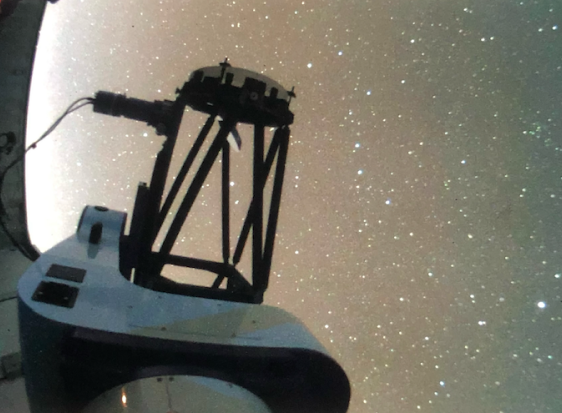
The UV-Optical-IR Wide-field Objective Prism Telescope, operating in southern New Mexico. It takes spectra of every source within a 1-degree field-of-view at 10 frames per second.
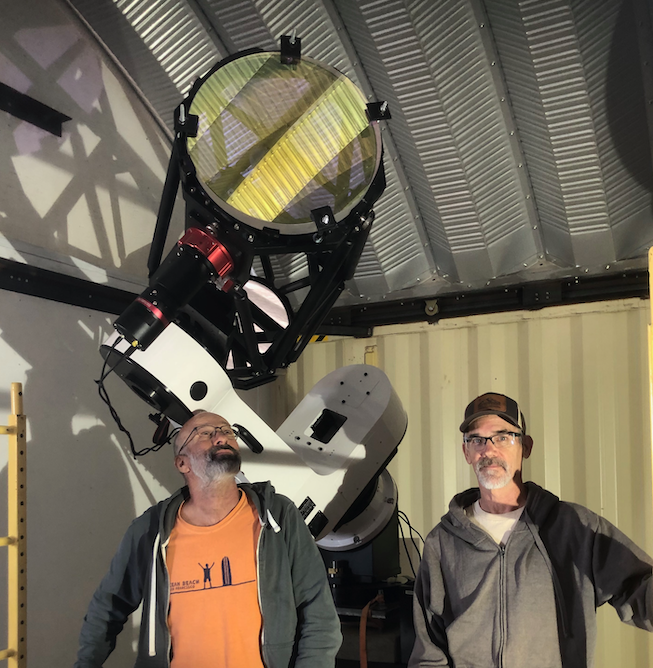
The UV-Optical-IR Wide-field Objective Prism Telescope. It provides a 1-degree field-of-view and 10 frames per second. Constructed by Brian Hill (left), John Adler (right), and the Space Laser Awareness team.
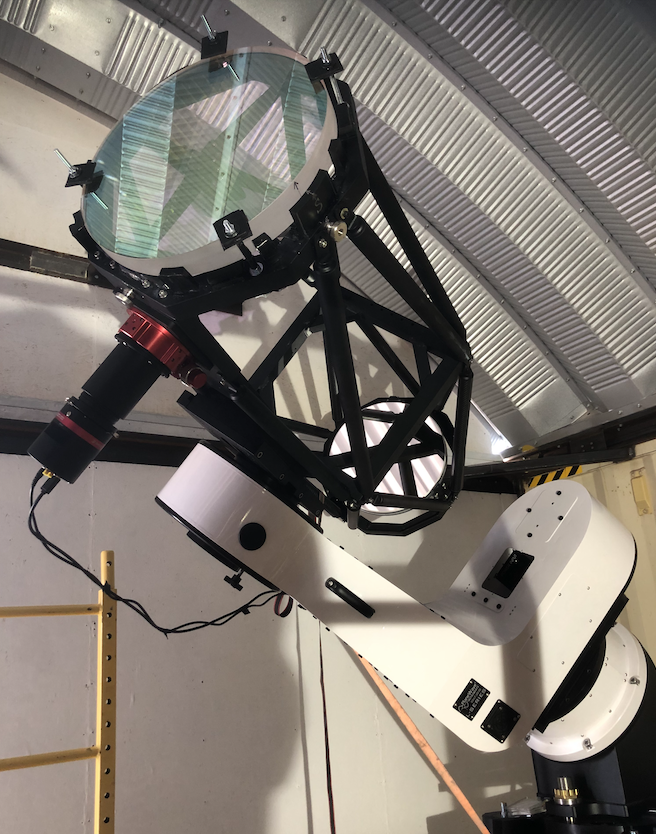
A close-up of the large wedge prism at the front of the UV-Optical-IR Wide-field Objective Prism Telescope. Its 1 degree field of view and fast CMOS camera is designed to search for transients having unusual spectra.

Here is a representative spectrum from the Objective Prism Telescope in New Mexico, covering wavelengths from 320 to 950 nm. Every point within a 1-degree field of view produces spectra with this level of resolution.
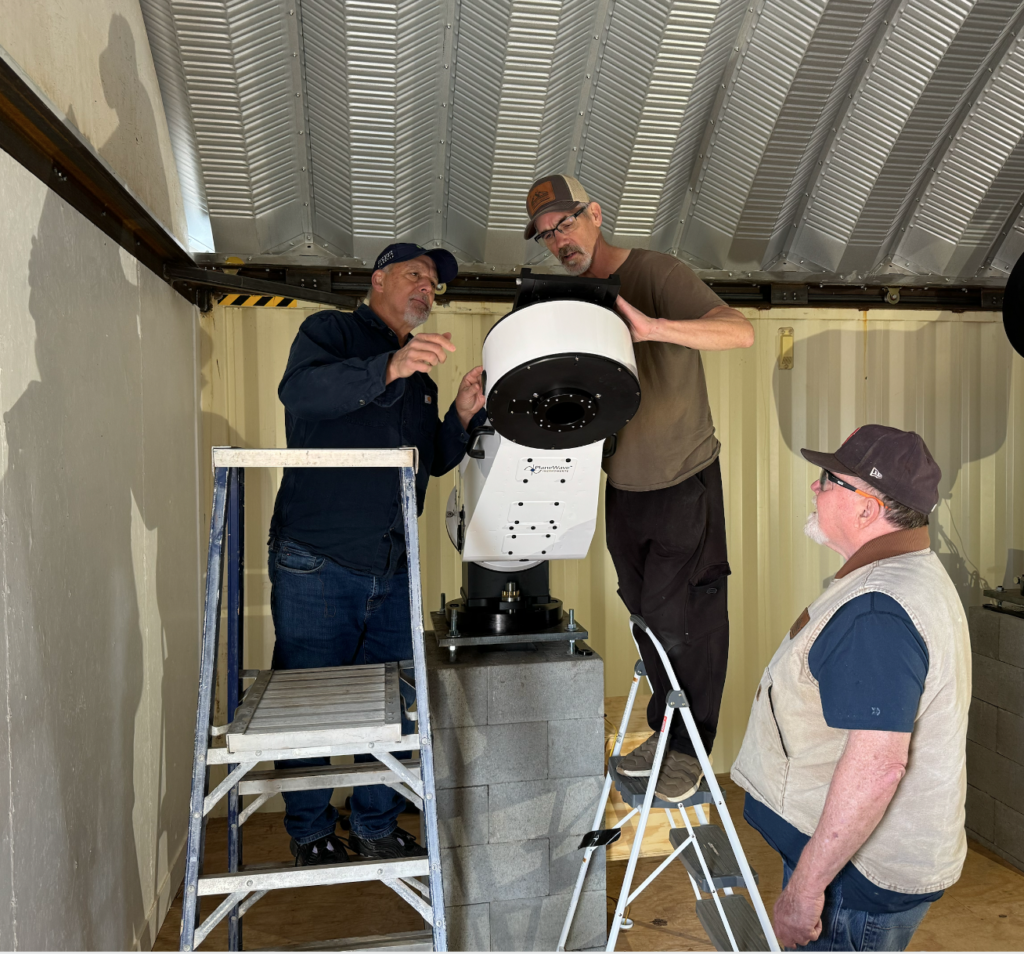
Geoff, John, and Michael (left to right) constructing and deploying the PlaneWave mount for the UV-Sensitive Objective Prism Telescope.